
When Marcus stepped into his kitchen after a long-awaited renovation in early 2026, he expected a triumphant moment. The counters gleamed, the backsplash was flawless, and every cabinet handle lined up like soldiers. But as the weeks passed, something gnawed at him. The room looked immaculate yet strangely hollow. Friends would say it was “so clean,” but they never lingered there. It felt less like the heart of a home and more like an abandoned showroom.
It turns out Marcus had stumbled into a common design trap: an empty-feeling kitchen. According to designers, the problem often isn’t a lack of furniture or storage—it’s a lack of visual anchors, layered texture, and personal warmth.
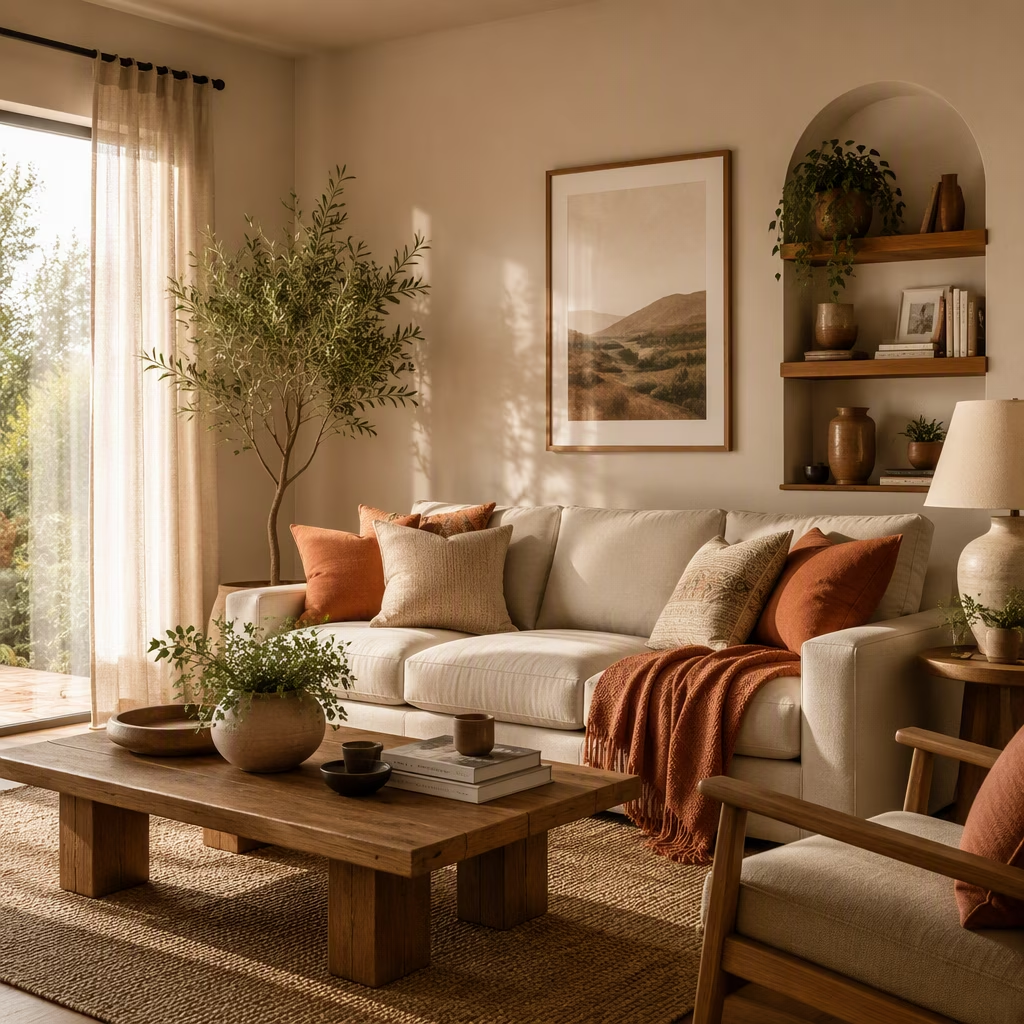
Find a Visual Anchor
Designer Nicole Cella of Wayfair Professional says a kitchen can feel empty when it lacks visual anchors. In a large, open layout, that might mean adding an island, textured barstools, or a statement overhead light. If a full renovation isn’t on the table, smaller moves still work. Cella recommends stylish hand towels draped on oven handles and patterned runners in front of the sink. These touches create focal points that make a space feel lived-in.
Jennifer Homeyer, CEO and owner of The Design House, warns that large, expansive blank walls or an island without texture “drain the room of proper scale.” Her advice is to introduce visual mass with purposeful layered texture. That might be a chunky wood cutting board, woven barstool seats, or a stoneware pitcher on the counter. When Marcus added a walnut cutting board and two leather-top barstools, the room finally stopped feeling like a furniture catalog.
Break Up the Blank Canvases
All-white and all-grey kitchens have had their moment, but by 2026 designers are increasingly calling them out as empty-feeling culprits. Blank walls, matching countertops, and monotonous colors can make a kitchen feel much emptier than it actually is. Homeyer suggests big moves like repainting a cabinet run or selecting textured countertops. Cella adds that bold hardware and warm lighting help add character while purposeful open space keeps the room feeling intentional, not sterile.
The lesson? Don’t toss out every white cabinet in a panic, but do break up the sea of sameness. Swap in mixed metal pulls, add a wood hood, or paint a lower bank of cabinets a deep green. The goal is contrast and depth, not clutter.
✅ Add bold hardware and warm accents
✅ Repaint one cabinet run for contrast
✅ Use textured stone or butcher block
❌ Keep every surface the same white or grey
Let the Countertops Tell a Story
Emilie Schiller, founder of Baltimore’s Home Methods, believes a kitchen should say “this is a space we use.” If someone drinks coffee every day, it’s okay for the coffee maker to sit on the counter. If they’re big fruit eaters, a bowl of fruit can stay out. That kind of purposeful styling reads as life, not mess. Marcus left his espresso machine plugged in and placed a ceramic bowl of lemons by the window. The room instantly felt more hospitable, like it remembered it was meant to host people.
Light It Like a Living Room
One of the quickest ways to flatten a kitchen is to rely on a single overhead light. Cella says poor lighting contributes to a flat, under-styled look. Under-cabinet warm lights, decorative wall sconces, or a small countertop lamp can change the entire mood after dark. Homeyer recommends thinking about task lighting and ambient lighting too—under-cabinet strips, lights behind glass cabinet doors, or a small lamp near the sink. Once Marcus layered in a warm under-cabinet strip and a tiny table lamp by the fruit bowl, even midnight snacks felt cozier.
| Zone | Empty-Feeling Culprit | Quick Fix |
|---|---|---|
| Island | No texture or central scale | Add barstools, runner, or statement pendant |
| Walls | Huge blank drywall | Install floating shelves with art or ceramics |
| Countertops | Bare and sterile surfaces | Style daily-use items with intention |
| Lighting | One harsh overhead fixture | Add task and ambient glow layers |
Add Personal Touches Without Creating Clutter
Cella points out that an absence of personal touches and everyday items—hand towels, cookbooks, decorative canisters—can add to the emptiness. You don’t need to clutter the workspace, but you do need signals that a human actually cooks there. Photos, art, and even fridge magnets help. Homeyer is a fan of floating shelves on a large blank wall to showcase art or artful ceramics; it’s an excellent way to layer without clutter. Schiller says to treat the kitchen like any other room in the house: if there’s space on a wall or shelf, adding a piece of art can make the space feel finished.
Marcus hung a small vintage landscape above the breakfast nook, added a shelf with three handmade mugs and a secondhand cookbook, and stuck a postcard from his sister on the fridge. The kitchen didn’t become messy; it became real. It had what designers call visual mass, warmth, and just enough personality to invite people in. As Cella puts it, the key is to focus on areas that naturally benefit from visual interest without disrupting functionality. That’s the fine line between an empty box and a collected, comfortable kitchen—less is more, until less is simply lonely.