
As I stand in the quiet embrace of my home in 2025, I feel the walls breathe with a warmth that defies the fleeting trends of yesterday. Gone are the days of 'millennial gray' and 'sad beige' that once cloaked our spaces in a sterile silence; instead, a rebellion blooms, inviting hues that dance with personality and charm. Yet, in this vibrant awakening, I find myself asking: is neutral paint truly fading into oblivion? No, it whispers back, a timeless foundation that grounds us in serenity. Liad Schwartz, a designer whose words resonate like poetry, once said that while color makes spaces unique and fun, neutrals will never be out of style—they are the soul of a home, offering a canvas for life's stories to unfold. Here, in this sanctuary of mine, I explore how these subtle shades evolve, weaving texture and contrast into the very fabric of modern living.
Ah, the shift in neutrals! Designers like Lauren Perry remind us that certain shades have indeed fallen from grace—cool whites that felt like icy breaths, sterile grays that echoed emptiness, and overly yellow beiges that screamed of outdated monotony. Instead, we embrace softer, nuanced tones inspired by nature's gentle hand: greiges that blend gray and beige into a harmonious murmur, taupes that whisper of earth and stone, and pewters that shimmer with understated elegance. These are not mere colors; they are emotions painted on walls. Perry calls them 'chalky whites with a touch of cream' or 'mid-tone greiges'—backdrops that feel both timeless and dimensional. Can you imagine a bright white kitchen now? It feels stark, almost alien, against today's cozier palette. Why, I wonder, did we ever think starkness equated to sophistication?
 :max_bytes(150000):strip_icc():format(webp)/8.26.22_NikkiHaramoglis_Cordell2651_Edit-ec5794105c5447d28bba4dd082a669ff.jpg)
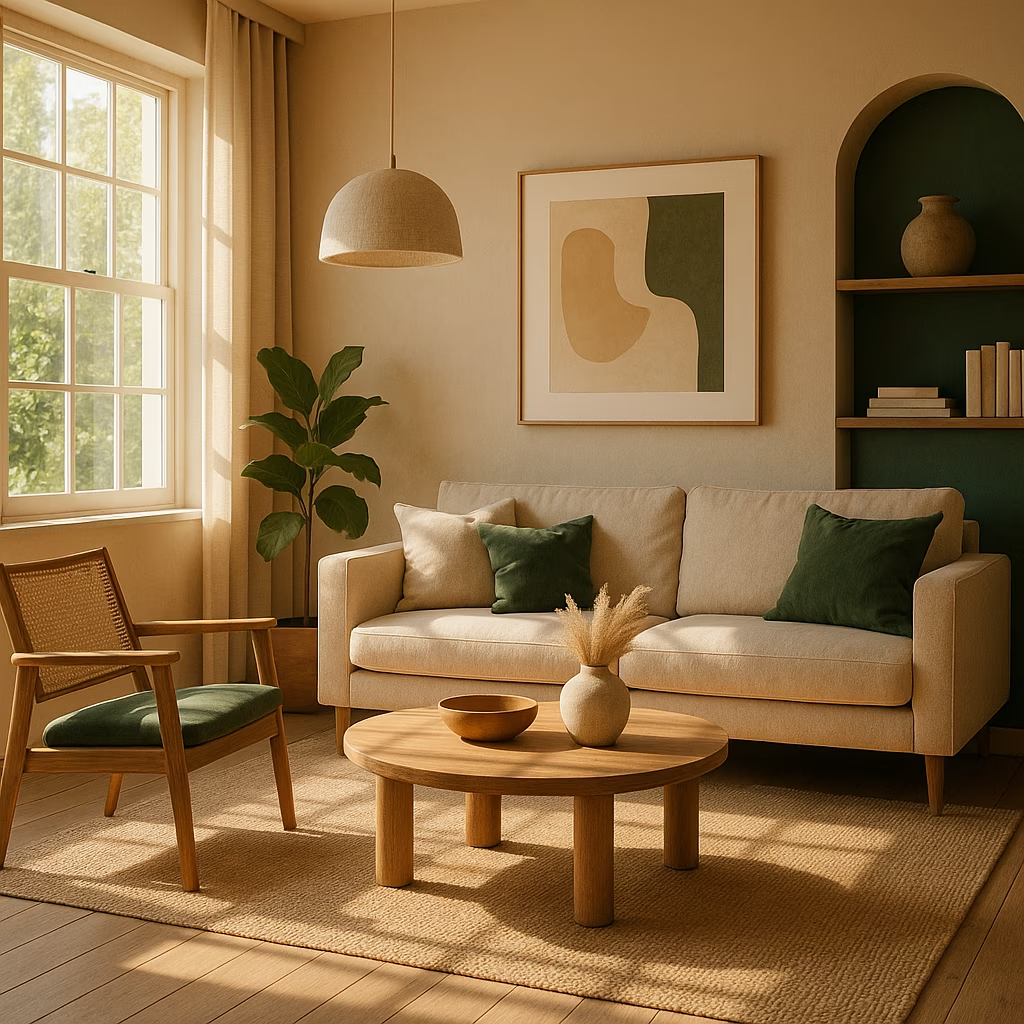
But neutrals, my friends, are not confined to the old trinity of beige, white, and gray. Schwartz opens my eyes to a world where deep chocolate browns or muted olive greens function as neutrals too—versatile, grounding, and surprisingly easy to live with. They are like unexpected friends in a crowded room, adding depth without overwhelming. In my own space, I've dared to use a rich brown on an accent wall; it feels like a warm hug, a silent promise of comfort. Isn't it fascinating how a shade once deemed bold can now anchor a room with quiet confidence?
Texture, oh texture! It is the unsung hero in this narrative. All the designers agree: without it, neutrals risk feeling flat, as lifeless as a doctor's exam room. Schwartz suggests limewash finishes for walls—imagine that same neutral shade transformed into something modern, layered, and alive, like ancient frescoes reborn. Perry adds layers through linen drapery that rustles in the breeze, oak cabinetry that tells tales of forests, textured upholstery that invites touch, or plaster finishes that echo artisanal hands. In my kitchen, I've paired matte walls with bronze hardware; the contrast sings, turning a simple space into a curated haven. But why stop at walls? Vivoda warns against predictable accents like colorful pillows or walls; instead, she urges us to layer in saturated tones through artwork, florals, and decor—pieces that feel elevated and luxe. A table of textures I adore:
| Element | Texture Example | Emotional Impact |
|---|---|---|
| Walls | Limewash finish | Feels organic and dimensional, like weathered stone 🌿 |
| Furniture | Textured upholstery | Adds warmth and invites relaxation, like a cozy nook 🛋️ |
| Decor | Bronze hardware | Creates contrast, lending a touch of timeless elegance ✨ |
Contrast, too, is essential—especially with light neutrals. Without it, rooms lose their soul. Perry says it best: 'A neutral room risks feeling flat without texture and contrast.' I've learned to play with darker trims that frame windows like bold brushstrokes, or richly hued accessories that pop against a soft backdrop. It's not about loud statements; it's about whispers that build to a crescendo. Have we forgotten how subtle shifts can transform the mundane into the magical?
:max_bytes(150000):strip_icc():format(webp)/Lauren-Perry-RoundHill-Banner_2048x-e90c628eece94e6da6f8dfdd7dfff833.jpg)
And then, there's color drenching—a technique that Schwartz champions not just for vibrant hues but for neutrals too. Imagine enveloping a room in the same warm off-white or light beige on walls, trim, and ceiling; it creates an atmosphere of serenity, like being wrapped in a soft, comforting embrace. In my bedroom, I've drenched the space in a gentle greige—it feels like a sanctuary, a place where time slows. This isn't mere decoration; it's alchemy, turning paint into poetry. A quick list of why color drenching elevates neutrals:
-
🎨 Unified Serenity: Blurs boundaries, making the room feel cohesive and calm.
-
🌟 Dimensional Depth: Adds intrigue without overwhelming, like layers of mist over a landscape.
-
💫 Modern Edge: Keeps the look fresh and contemporary, defying flatness.
As I reflect in 2025, the journey with neutral paint feels deeply personal—a dance between tradition and innovation. It whispers of nature's palette, of textures that tell stories, and contrasts that spark joy. But in this ever-evolving world, I leave you with an open question: What does the future hold for the colors we choose to surround ourselves with, and how will they shape the stories of our homes?