
I used to think home upgrades were about chasing trends. Then I spent a few years watching friends and neighbors renovate, sell, and sometimes regret. By 2026, with utility bills climbing and buyers scrolling listings like they are shopping online, I started asking a different question: which upgrades actually pay me back? I talked to contractors, read expert advice, and tested a few projects myself. The pattern was clear. The best upgrades are practical, good-looking, and not too personalized. Go too fancy or too custom, and you can hurt your return when it is time to sell. Boost curb appeal, and the whole house feels more inviting. Here is what I would do, and what I would skip.
1. Kitchen: High ROI, But Do Not Over-Customize
My friend once showed me a $15,000 custom range he had installed. It was beautiful. It also made his kitchen feel like it belonged to him and no one else. Hans Ingram, a real estate expert and partner at JSM Project Management, says kitchen renovations are a consistent high-ROI home upgrade, but over-customization kills returns. Buyers want quality appliances, solid countertops, and functional layouts. That custom range? It will not move the needle when you sell.
Thomas Borcherding, owner and lead designer at Homestar Design Remodel, gave me a tip I wish I had known earlier: reach out to a local cabinetry dealer. It can lead to discounts of up to 50% off MSRP. Many of these companies also offer free in-house design services, which reduces your overall cost. I used a local dealer for my own cabinet refresh. The design help alone saved me from a bad layout.
| Upgrade | What I would spend on | What I would avoid |
|---|---|---|
| Kitchen | Quality appliances, solid counters, functional layout | $15,000 custom range, hyper-specific finishes |
| Bathroom | Modern fixtures, better lighting, neutral tile | Moving plumbing or electrical just for style |
| Exterior | Garage door, front door, fresh landscaping | Overly personal garden statues or themed decor |
| Energy | Windows, insulation, HVAC | Chasing top-tier window models with diminishing returns |
2. Bathroom: Small, Neutral, and Utility-Smart
Ingram says bathroom updates deliver similar returns to kitchen renovations, averaging around 60% to 70% return on investment. That number surprised me. Buyers notice outdated bathrooms immediately. For many, it is a dealbreaker that affects their entire offer. Modern fixtures, better lighting, and neutral tile choices make a huge difference without breaking the bank.
Borcherding adds that keeping bathroom upgrades simple prevents unnecessary relocation of utilities like electrical and plumbing. That drastically reduces costs. I followed that advice in my hall bathroom. I kept the toilet and tub in place, swapped the vanity, added a new light fixture, and used warm neutral tile. The room felt twice as expensive as it was.
3. Curb Appeal: The First Impression That Colors Everything
I used to think curb appeal was just for magazine covers. Then I saw how much it mattered. Ingram says a new garage door can return 90-95% of its cost, one of the highest ROI improvements you can make. He also recommends fresh landscaping and updated front doors. They create a crucial positive first impression that colors everything a buyer sees afterward.
If your home needs multiple exterior upgrades, Borcherding recommends working with a singular contractor. Many companies have minimum profit requirements. Once that minimum is met, you can realize serious cost savings. I bundled my garage door, front door paint, and landscaping cleanup with one crew. The total was lower than three separate quotes, and the house finally looked like someone cared.
4. Energy Efficiency: Buyers Now Care About Bills
In 2026, utility prices are not getting cheaper. Energy-conscious buyers are more concerned than ever about the energy efficiency of their potential home purchase. That makes energy-efficiency upgrades a great selling point.
Ingram says new windows, better insulation, and modern HVAC systems used to be afterthoughts. Now they are becoming expected features. People care about their utility bills. Borcherding emphasizes that some energy-efficiency upgrades double as curb appeal enhancements, such as upgrading windows or the front door. You get the best of both worlds.
He also recommends skipping the larger replacement window companies and sourcing windows from smaller local window contractors whenever possible. When shopping for windows, pay attention to energy performance metrics. Price increases exponentially with diminishing energy returns as you go up in models. I chose mid-range windows with strong ratings instead of the top tier. The difference in my energy bill was noticeable, and I did not overpay for marginal gains.
What I Would Skip
Not every beautiful upgrade is a smart investment. These are the ones I would skip if I wanted the most return.
-
🏊 Pool installation. Ingram says pools rarely pay off in most markets. I believe it. Between maintenance, insurance, and safety, a pool is a lifestyle choice, not a value play.
-
💎 Luxury remodels. Just like pools, luxury overhauls rarely return much of the investment. Any improvement that makes your home significantly nicer than the neighborhood average usually underperforms.
-
☀️ Sunrooms. They are beautiful, but costly to maintain. Most are energy hogs, and they simply do not appeal to the average buyer.
-
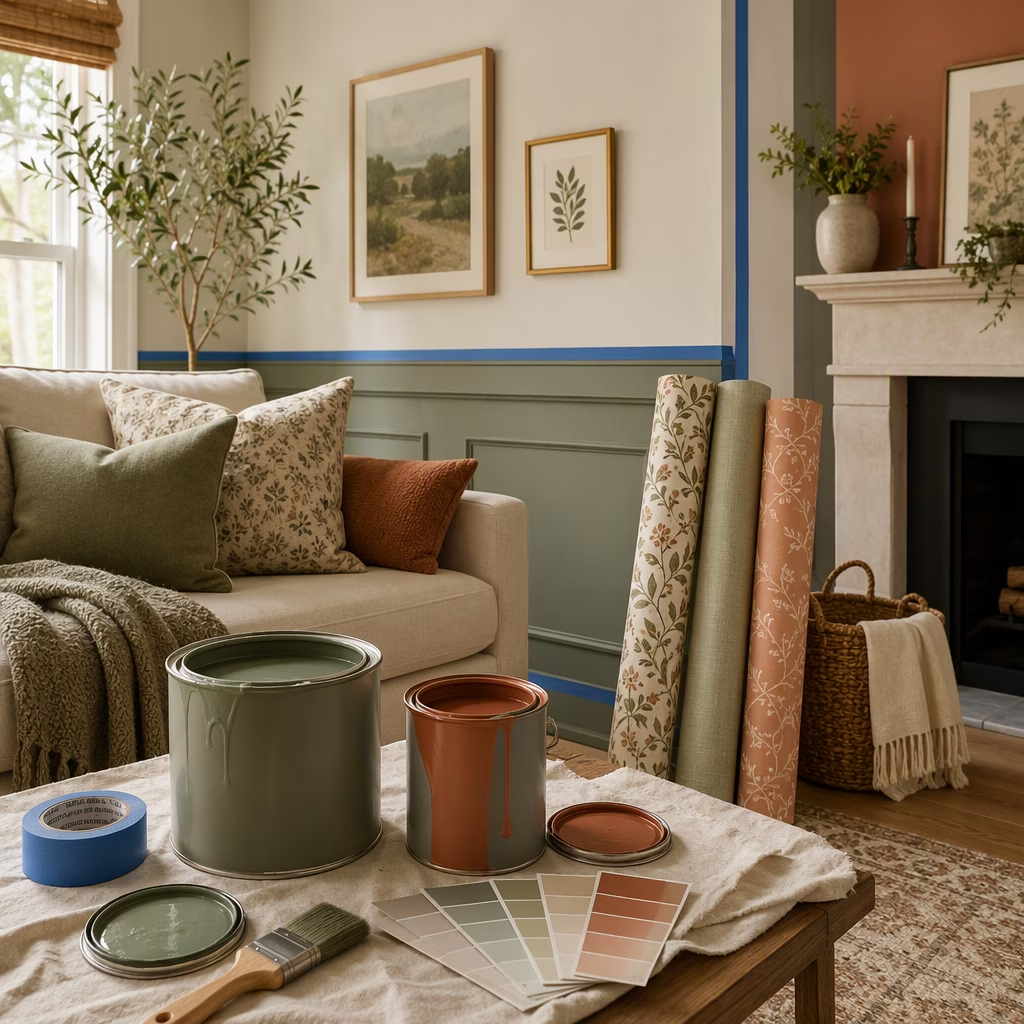
🎨 Wallpaper. Wallpaper has had a design moment for several years, and it can beautify an interior if done well. But patterns come and go quickly. Buyers largely view wallpaper as something they will have to remove.
My 2026 Renovation Rulebook
After all this, I keep a simple checklist on my phone:
-
Prioritize upgrades that are both practical and good-looking.
-
Do not over-personalize. Buyers need to see themselves in the house.
-
Get quotes from local cabinetry dealers and local window contractors.
-
Bundle exterior projects with one contractor to hit minimums and save.
-
Check energy performance metrics, but avoid diminishing returns.
-
Spend on what buyers notice: kitchens, bathrooms, curb appeal, and efficiency.
-
Skip what buyers see as a chore: wallpaper, pools, sunrooms, and luxury for its own sake.
I am not a professional flipper. I am just a homeowner who wants my money to work as hard as I do. In 2026, the smartest renovation is not the flashiest one. It is the one that makes the house more functional, more efficient, and more inviting. If I sell, buyers will see the care. If I stay, I get to enjoy it. That is the best return of all.