
Taste in home decor may be deeply subjective, yet certain choices land on an unspoken bad-taste list with remarkable consistency. As trends accelerate in 2026, the boundary between fashionable and tacky often blurs when a current aesthetic is pushed beyond its natural limit. Several interior designers have named the details they hope will fade permanently from modern homes. Their guidance is less about rigid rules and more about a calibrated sense of restraint.
Monochromatic Matching Gone Too Far
A monochromatic room can feel like a calm lake, but when the matching extends across every bedroom set, trend-driven color story, or heavy theme, the effect collapses under its own weight, much like a soufflé that has been opened too many times. Melanie Coddington of Coddington Design suggests that these elements may become outdated quickly and fail to stand the test of time. A balanced approach, focused on enduring design principles, preserves a timeless aesthetic without putting every design egg in one basket.
The Shine of Synthetic Fabrics
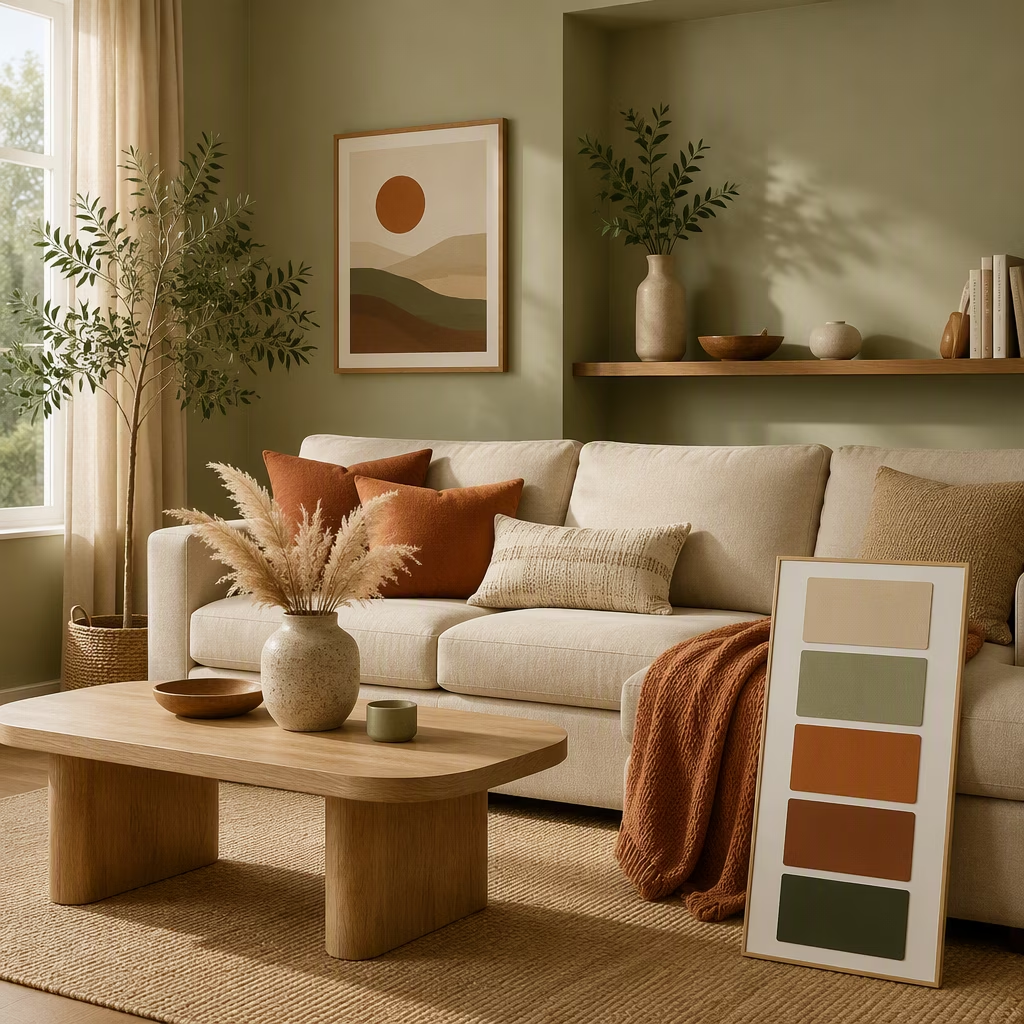
Silk and velvet have a natural sheen that can read as luxurious, but deliberately shiny textiles often resemble a sequined gown worn to a morning coffee run—dramatic, yet misplaced. Coddington warns that super shiny fabrics can feel tacky and have a short-lived aesthetic. Instead, materials with a subdued sheen or matte finish are more likely to look sophisticated over time. In 2026, the smartest upholstery choices tend to favor depth and texture over plastic-like gloss.
Plastic Laminate Countertops
In kitchens and bathrooms, plastic laminate counters are one feature Kelly Hoppen would never welcome back. She describes them as tacky and says they do nothing for the space. While laminate is often budget-friendly, the current market offers a wider range of countertop materials, from engineered stone and sintered surfaces to polished concrete, that deliver longevity and a more refined appearance. Homeowners who prioritize long-term value increasingly see laminate as a false economy in high-traffic rooms.
Primary Colors Without Nuance
Unless someone is designing a vintage-era preschool classroom, bright red, blue, and yellow together tend to read as a three-ring circus in a chapel—loud and at odds with adult calm. Coddington says it is difficult to incorporate all three primary colors into an adult living space without the design feeling overly simplistic or juvenile. Softer alternatives, such as aubergine instead of red, provide the same energy with greater sophistication.
Pattern Overload
Layered patterns can be lovely, but when a flower print wallpaper covers every wall, the room begins to hum like an over-scored orchestra drowning its own melody. Kelly Hoppen suggests treating a bold pattern as an accent and making it a star piece within a muted neutral background, perhaps on a single wall or in a niche. This light touch allows personality to shine without sliding into visual noise. The same principle applies to any distinctive motif, from oversized stripes to tropical prints.
Maximalism Without Curation
Maximalism remains a celebrated aesthetic in 2026, but only when it behaves like a well-edited gallery rather than an overstuffed attic. Coddington advises careful curation, a cohesive theme, and a defined color palette. Clutter should be avoided; every item must contribute meaningfully, otherwise the space becomes overwhelming and tacky. Successful maximalist rooms feel intentional because each object has a reason for being there, and the eye can rest even amid abundance.
| Tacky Detail | Designer Perspective | Consider Instead |
|---|---|---|
| Matching themed decor | Becomes outdated quickly | Enduring neutral layers |
| Super shiny synthetic fabric | Feels tacky and short-lived | Matte or subtly lustrous textiles |
| Plastic laminate countertops | Does nothing for a room | Engineered stone or porcelain |
Balance as the Ultimate Rule
Kelly Hoppen offers an overarching principle: design is about balance in every aspect, much like dressing oneself. When jewelry, makeup, and accessories are overdone, the whole look speaks too much. The same is true in a room—no single texture, color, or statement should shout over the others. The most successful interiors in 2026 are not the ones that chase every microtrend but those that understand moderation.
By avoiding super-shiny finishes, plastic laminate counters, juvenile primary palettes, and overmatched themes, a home can feel intentional rather than costume-like. The designers’ guidance points not toward blandness, but toward a curated restraint where each element earns its place.