
In the ever-evolving world of interior design, the pendulum of trends swings with nostalgic force. As 2026 unfolds, a fascinating reversal is taking place within homes across the globe. After a prolonged era dominated by safe neutrals, stark minimalism, and expansive open floor plans, there is a palpable, collective yearning for personality, emotional connection, and defined spaces. Designers are witnessing a powerful resurgence of features once considered hopelessly outdated, now being re-embraced for their character, warmth, and storytelling ability. This shift marks a move away from impersonal, transient aesthetics toward interiors that feel curated, lived-in, and deeply personal.
The Grand Return of Wallpaper and Saturated Color
 :max_bytes(150000):strip_icc():format(webp)/Kendall-Wilkinson-Interior-Design-Residential-Project-Kaleidoscope-Oasis-Living-Room-Fireplace-8617855ccb6c434ebbb973eaef6199ac.jpeg)
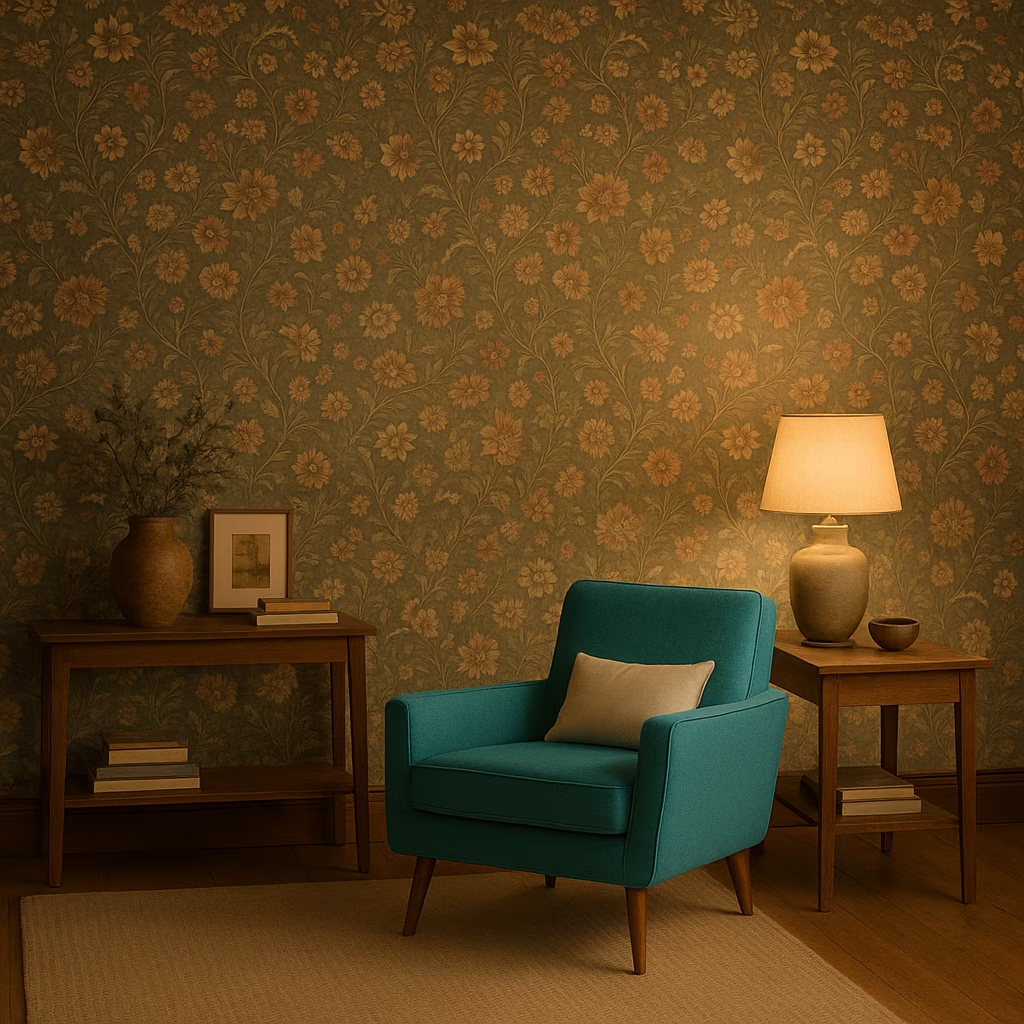
For years, blank, white walls were the undisputed champions of interior design, praised for their versatility and calm. However, 2026 sees a dramatic departure from this paradigm. "After years of safe neutrals and minimalism, there’s a renewed desire for personality in interiors, spaces that people can feel emotionally connected to," observes Phoebe Beachner, an interior designer with Hart Howerton. This craving for connection is manifesting in a bold embrace of wallpapered rooms and color-drenched spaces. No longer confined to powder rooms, wallpaper is making a particularly surprising and delightful comeback in the heart of the home: the kitchen. Designers are applying bold prints and textures to kitchen backsplashes and even entire walls, transforming utilitarian spaces into vibrant hubs of creativity.
Colleen Bute Bennett, founder of CBB Design Firm, notes that this isn't just any wallpaper revival. There's a specific affection for old-school styles that evoke a sense of history and craftsmanship. Floral patterns reminiscent of English gardens, intricate Waverly designs, and damask-like textures that feel Victorian are all experiencing a renaissance. This trend signifies a move towards interiors that feel collected and layered with time, rather than assembled from a catalog.
Goodbye Open Concept, Hello Defined Rooms 📐
The open floor plan, which reigned supreme for decades, is being thoughtfully re-evaluated. The quest for boundless, airy spaces is giving way to a renewed appreciation for architecture that provides structure, intimacy, and purpose. Architects and designers in 2026 are frequently receiving requests not to tear down walls, but to put them back up. Homeowners are seeking to carve out distinct, clearly defined rooms, a shift driven by several factors:
-
Nostalgia & Authenticity: Many wish to restore older homes to their original, compartmentalized layouts, honoring the building's history.
-
Functional Zoning: There's a practical need to confine activities and their associated items. A home gym's kettlebells or a child's toys don't belong in the sightline of a formal living area.
-
Ease of Decoration: Defined rooms provide a clear architectural framework, making it simpler to design, decorate, and refresh a space over time.
Consequently, rooms that had nearly vanished are staging a triumphant return. The formal dining room, a place for dedicated gathering and celebration, is back. The home office or study, a necessity for hybrid work models, is being designed as a serious, separated workspace free from household distractions. Even the classic living room or parlor, a space meant purely for relaxation and conversation, is being reinstated as a sanctuary away from the noise of open-plan living.
The Maximalist Renaissance: Trim, Texture, and Treasure
Maximalism is no longer a fringe style; it's a mainstream movement celebrating abundance, detail, and personal narrative. This goes beyond just bold wallpaper. It's about layering, adding intricate architectural detail, and decorating with objects and art that tell the homeowner's unique story. According to Bennett, one maximalist feature exploding back onto the scene is decorative trim in all its glorious forms. After a period of streamlined, trim-less walls, people are rediscovering the charm and grandeur of:
| Type of Trim | Impact on Space |
|---|---|
| Crown Molding | Adds elegance and finishes the junction of wall and ceiling. |
| Wainscoting & Chair Rails | Introduces texture, protects walls, and breaks up large wall spaces. |
| Picture Frame Trim | Creates classic, framed panels for a tailored look. |
| Elaborate Door & Window Casings | Frames openings with drama and craftsmanship. |
This trim is appearing in not just classic white but in bold colors and high-contrast finishes, making it a statement feature in itself. Beachner adds that maximalism is also evident in the embrace of vintage and antique pieces that add warmth, memory, and a sense of place. Furthermore, bold animal prints and an eclectic mix of rich textures—think velvets, furs, embroidered linens, and carved woods—are being layered to create sensually rich environments.
Built-In Seating: The Comeback of Cozy & Clever
A feature that oscillates in and out of favor, built-in seating has firmly secured its place in the 2026 home. It represents the perfect marriage of aesthetic charm and pragmatic problem-solving. Designers like Heather Millward, principal of Millward Architecture + Design, report high demand for these custom solutions in recent projects. "Whether it be a custom sofa or an intimate banquette nook, clients love these customized space-saving solutions because they can maximize seating while incorporating clever storage options in tight spaces," Millward explains.
These built-ins are celebrated for their ability to:
-
🛋️ Define cozy nooks in open-plan areas or underutilized corners.
-
📦 Provide hidden storage for blankets, books, or games, combating clutter.
-
✨ Offer a custom, high-end look that feels integral to the architecture.
The genius of modern built-ins often lies in their adaptability. A window reading nook or breakfast banquette is typically fitted with removable cushions. When tastes change or fabrics wear, homeowners can simply replace the cushion covers, giving the entire feature a fresh, new look without a major renovation. This longevity makes it a sustainable and timeless choice.
The 1980s Redux: The Unexpected Return of Brown
While many 80s design trends (think pastel laminate and geometric mauve carpets) are best left in the past, one element from that decade is staging a surprising and sophisticated comeback: the color brown. "I think we lived in browns as kids in the 80s, and we’re beginning to see that again everywhere," says Bennett, recalling the era's affinity for brown corduroy and leather.
In 2026, brown is being reimagined not as a drab, dated hue, but as a rich, warm, and grounding new neutral, poised to dethrone the cool grays that have dominated for years. This isn't the flat, muddy brown of decades past. It's a spectrum of inviting shades:
-
🍫 Chocolate and Espresso: Deep, luxurious tones for walls and statement furniture.
-
🍂 Camel and Taupy: Mid-range, flexible neutrals for upholstery and textiles.
-
🌰 Hazelnut and Oatmeal: Lighter, airier shades that bring warmth without heaviness.
Expect to see this palette applied expansively: on painted walls, furniture upholstery, area rugs, and window drapery. Paired with cream, black, terracotta, or olive green, brown creates a cozy, organic, and incredibly inviting atmosphere. It signals a design shift towards comfort, nature, and sensory richness, proving that sometimes, the most unexpected comebacks are the most rewarding. The home of 2026 is thus a tapestry of revived traditions, personalized expression, and intelligent design, proving that in the world of interiors, what's old is perpetually becoming new again.