
Creating an elegant living space that whispers luxury rather than screams 'budget' is an art form many aspire to master. In 2025, the line between sophisticated and tacky is finer than ever, and top interior designers are pointing out the subtle missteps that can instantly downgrade a room's aesthetic. The goal isn't necessarily about spending more, but about spending smarter and designing with intention. Avoiding these common pitfalls can transform a living room from a forgettable stage set into a deeply personal and stylish sanctuary, a place that feels both curated and effortlessly inviting.
The Matching Set Trap: A Symphony of Sameness
Jamie Gasparovic of Studio Gaspo identifies matching furniture sets as a major design faux pas. Opting for an entire living room suite from a single store, she warns, creates a visual monotony that feels more like a showroom floor than a lived-in home. "Matching sets are a major red flag and make your space look one-note rather than design forward," Gasparovic explains. This approach can make even expensive pieces look mass-produced, like a chorus where every singer is hitting the same note—predictable and lacking depth.
The Fix: Embrace the art of the mix. Shop across different retailers and eras. Incorporate a vintage armchair with a modern sofa, or a sleek, contemporary coffee table beside a rustic media console. This layered approach adds character and tells a story, making your space uniquely yours.
 :max_bytes(150000):strip_icc():format(webp)/GettyImages-1824615222-3d26cc52dfb44975817175fba8cf85b8.jpg)
🎨 The Accent Wall Debate: A Half-Finished Thought
While some designers see merit in a single feature wall, Gasparovic is firmly against it. She believes an accent wall can make a room feel incomplete, as if the decorating budget ran out halfway through the project. "It looks like you cheaped out, and the space looks incomplete and a little amateur," she notes. An accent wall can feel like a solitary tree in an empty field—isolated and oddly placed.
The Fix: For a truly elevated look, commit to the entire room. If you love a bold paint color, intricate trim work, or dramatic wallpaper, apply it to all four walls. This creates a cohesive, immersive environment that feels intentional and luxurious.
🧵 Forgoing Textural Layers: The Flatness Factor
Anais Chaumien of Design by Anais emphasizes that a lack of layers is a fast track to an inexpensive-looking space. A room with only one type of textile feels flat and uninviting. Luxury is built in the details of texture and contrast.
The Fix: Chaumien suggests a tactile mix. "When picking pillows, try to mix textured fabric (like boucle) with other ones (like linen or velvet) to add rhythm to the space." Think of your textiles as a well-composed orchestra—the boucle is the cello, the linen is the violin, and the velvet is the deep percussion, all working together to create a rich symphony of comfort.
:max_bytes(150000):strip_icc():format(webp)/GettyImages-1824615222-6c54ad72ebe54a2e9b542b832c87c628.jpg)
The Rug Size Blunder: An Island of Isolation
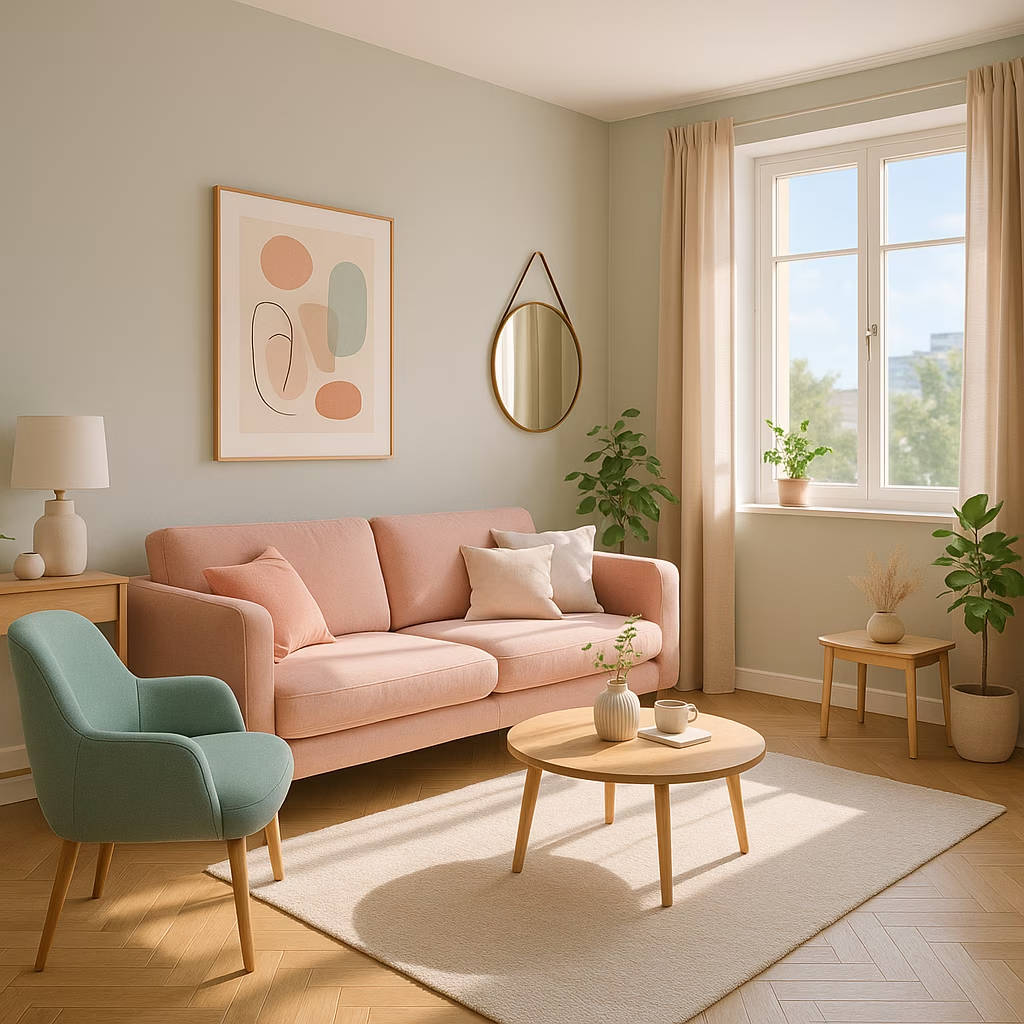
One of the most common mistakes is choosing a rug that's too small. A diminutive rug floating in the center of a room makes all the furniture seem adrift and disconnected. Chaumien offers a simple mantra: "In case of doubt, go bigger."
The Fix: A properly sized rug should anchor the seating area. Aim to have at least the front legs of all your primary furniture pieces resting on the rug. If you have a smaller rug you adore, consider layering it on top of a larger, neutral natural fiber rug (like jute) to achieve the correct scale while adding more texture.
:max_bytes(150000):strip_icc():format(webp)/GettyImages-1415448685-9e0df285a0cc46d18aba3e1eb6883560.jpg)
💡 Builder-Grade Lighting: The Soul-Less Glare
Standard, boring light fixtures are the silent killers of ambiance. They offer function but zero personality, casting a harsh, uninspiring light that does nothing for the room's mood.
The Fix: Lighting is jewelry for your home. Swap out generic fixtures for something that reflects your style, whether it's a sculptural modern pendant, a classic drum chandelier, or a set of quirky sconces. Renters can do this too—just safely store the original fixture to reinstall when moving out.
️ Bare Walls: The Echo of Emptiness
Emily Sturgess of Emily Sturgess Design warns that bare walls make a living room feel unfinished and transient. "When a living room's walls are bare it can easily look unfinished and inexpensive," she explains. Empty walls are like a conversation with long, awkward pauses—they lack energy and personality.
The Fix: You don't need a fortune to adorn your walls. Find a photograph you love and have it printed large, scour local vintage shops for unique oil paintings, or hang a stunning statement mirror that reflects light and expands the space. The key is to create visual interest and layers on the vertical plane.
🎭 The Final Secret: Infuse Your Personality
Above all, the designers agree that the worst mistake is creating a space that doesn't feel like you. "Don’t be afraid to infuse your unique personality into your space," Chaumien advises. A room devoid of personal touches, no matter how expensive the furnishings, will always feel like a hotel lobby—beautiful but impersonal.
| Mistake to Avoid | Luxury-Boosting Fix |
|---|---|
| Matching Furniture Sets | Mix styles and eras for a curated look |
| A Single Accent Wall | Commit to bold choices on all walls |
| Flat, Monotonous Textiles | Layer boucle, linen, and velvet for depth |
| A Too-Small Rug | Go bigger to anchor the seating area |
| Generic Light Fixtures | Choose lighting that acts as art |
| Bare Walls | Use art or mirrors to add personality |
In 2025, luxury in interior design is defined by thoughtful curation, tactile richness, and authentic self-expression. By sidestepping these common errors, you can craft a living room that feels both expensive and authentically yours—a true sanctuary for modern living.