
Let me tell you about the day I realized that the right paint could make my living room look like it belonged in a magazine—without a single new piece of furniture. It was early 2026, and after yet another scroll through perfectly curated home feeds, I decided enough was enough. I wanted a space that felt sophisticated, thoughtful, and just a little bit moody. The secret, as it turns out, wasn't a renovation. It was a few gallons of paint and some sage advice from two designers who really know their stuff. I reached out to Tracy Morris of Tracy Morris Design and Anngelica Mohabir of Determined by Design, and they generously spilled the tea on their favorite elevating shades. These colors don't just look good—they transform a room's entire personality.
What followed was a masterclass in using paint as more than a backdrop. "Your living room's paint color acts as the base for the room," Morris explained, and that idea changed everything. Instead of trying to match my sofa, I needed to anchor the design. If you've ever felt stuck with beige walls but secretly craved something richer, you're in the right place. Here are the five absolute must-consider colors, plus a few honorable mentions that deserve every bit of love they get.
🎨 Warm Cream: The Heavenly Neutral
 :max_bytes(150000):strip_icc():format(webp)/bungalow-by-the-sea11-97e9a5d4bec741a998dea232ded3a628.jpg)
I used to think cream was just a safer version of white—kind of vanilla, literally and figuratively. Then Morris described it as a "warm, welcoming glow that feels both timeless and polished," and I saw the light. Warm cream brightens without that sterile, clinical stare some whites give you. It’s like the room is perpetually basking in golden hour. Morris pointed out that this shade "creates the perfect backdrop for artwork, furnishings, and texture" because it supports everything else without competing.
I'd add that in 2026, we're all craving comfort that doesn't sacrifice style, and cream delivers exactly that. Whether you layer in chunky knit throws, brass accents, or bold abstract art, a warm cream wall makes each piece look more curated. It’s the paint equivalent of a great canvas tote bag—effortless and elevated. If you’re hesitating, just remember: it works with literally any style.
🌿 Olive Green: Earthy and Enveloping
Moving one notch deeper on the warmth scale, we have olive green—a shade I'd file under "surprisingly versatile." Morris called it a color that "adds depth and sophistication while still feeling grounded and natural." She's right. It’s earthy but never heavy, and it brings an unexpected lushness to a space. You know that feeling when you walk into a room and instinctively exhale? That’s olive green.
I was a bit skeptical at first because green can conjure up images of 1970s appliances, but this hue is far more modern. The key, Morris explained, is that it "wraps the room in a cozy, comforting tone that works beautifully with wood, brass, and warm textiles." So if you have a wood coffee table or some vintage brass candlesticks, olive green will make them sing. It’s color without chaos, character without clutter. I’d even call it the introvert’s answer to boldness—confident but quiet.
💙 Charcoal Blue: Moody and Architectural
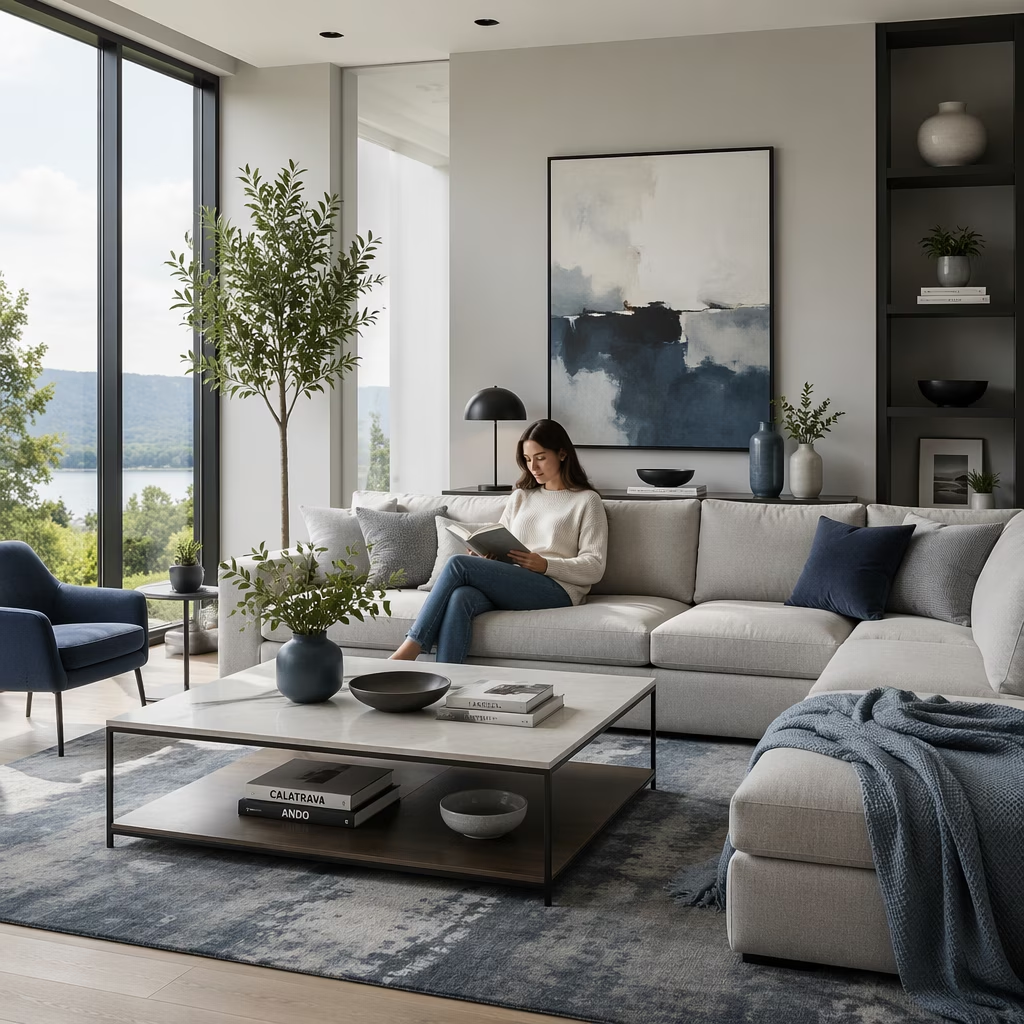
If you want a color that feels like a New York loft after dark, charcoal blue is your new best friend. I admit I was initially timid about going this dark, but Mohabir’s enthusiasm genuinely sold me. She says it “makes a living room feel intimate and architectural,” and after testing a swatch on my own wall, I saw exactly what she meant.
This shade isn’t just a color—it’s an experience. It sharpens doorways, makes white trim pop like graphic outlines, and somehow both expands and encloses at the same time. Mohabir described a “cocoon effect, moody, modern, and deeply inviting.” I noticed that when I turned on the lamps in the evening, the blue walls created this cinematic glow that regular beige just never could. Even my unremarkable gray sofa suddenly looked intentional. If you’re afraid of darkness, think of charcoal blue as the weight of a well-tailored coat—structured, elegant, and deeply comfortable.
🏺 Taupe: The Quiet Chameleon
Taupe gets a bad rap for being boring, but I think that’s just a sign we haven’t been using it right. Both Morris and Mohabir championed taupe as the ultimate balancing act—not too warm, not too cool, and endlessly adaptable. It’s the color that lets your furniture be the star while subtly pulling everything together. "It pairs effortlessly with creams, charcoals, woods, and modern accents," Mohabir noted, and I’ve seen it firsthand in a friend’s home where a taupe wall made a thrifted velvet armchair look straight out of a design studio.
What I love most about taupe in 2026 is that it’s incredibly forgiving as light changes throughout the day. Morning makes it airy, noon adds a bit of punch, and evening drapes it in softness. No wonder designers turn to it when they want a room that feels curated but never forced.
🍷 Mulberry: Unapologetically Rich
And then for something completely different—mulberry. I’ll be honest, when Mohabir first mentioned this color, I thought she was talking about a trendy lipstick. But mulberry on walls is a whole mood. "It’s the color for someone who wants their living room to have presence," she said, "moody, dimensional, and unapologetically rich." This isn’t a shade for the faint of heart, but it’s not chaotic either. It’s controlled drama, with a pulse.
The best part? Textures like velvet, linen, and boucle look instantly more luxurious against mulberry. It’s as if the walls lend a kind of editorial polish—like the room belongs in a high-end magazine spread. Mohabir described that "New York edge," and I completely get it. If you’re ready to stop playing it safe and design a space that feels deeply personal, mulberry is waiting.
🌟 Honorable Mentions: The Designers’ Secret Weapons
Because Morris and Mohabir had so many brilliant suggestions, I couldn’t leave out these four shades. They may not have made the top five, but they’re every bit as transformative.
-
Dusty Blue 🏞️: Morris adores dusty blue for its “calming, serene energy” and how it “highlights natural light beautifully.” It’s like the lighter, airier cousin of charcoal blue, classic and just a touch unexpected.
-
Goldenrod ☀️: I raised an eyebrow at yellow, but Mohabir’s description changed my mind. "It shifts with the day," she said, "glowing at noon and warm and ambient at night." Goldenrod expands a space visually while staying refined—no school-bus vibes here.
-
Charcoal ⚫: While we talked about gray in neutral terms, Morris specifically calls out charcoal for adding “drama and elegance” without overwhelming. It makes trim and furniture pop and creates a moody, modern feel that’s deeply chic.
-
Jewel Green 💚: Think of this as mulberry's green counterpart. Mohabir calls it “bold without being loud,” and it instantly adds depth and an artistic, collected aura to a living room.
🖌️ Finding Your Perfect Match
What struck me throughout these conversations is that an elevated living room doesn’t require a complete overhaul. It requires a cohesive base, and paint is the simplest way to get there. Whether you lean toward the gentle embrace of warm cream or the dramatic magnetism of mulberry, remember that these colors work because they enhance what you already own. They’re not trends that will date your space in a year; they’re staples that make everything else look more expensive, more intentional.
In 2026, with so much noise about fast furniture and churn culture, I’m leaning hard into colors that feel substantial. Grab a few sample pots, tape them to your wall for a week, and see how they change with the light. You might be shocked at how a single coat can transform not just your room, but how you feel in it. Happy painting! 🖤